
Newsletter
An MPL Perspective on the SafeCare Study
Jan 31, 2023
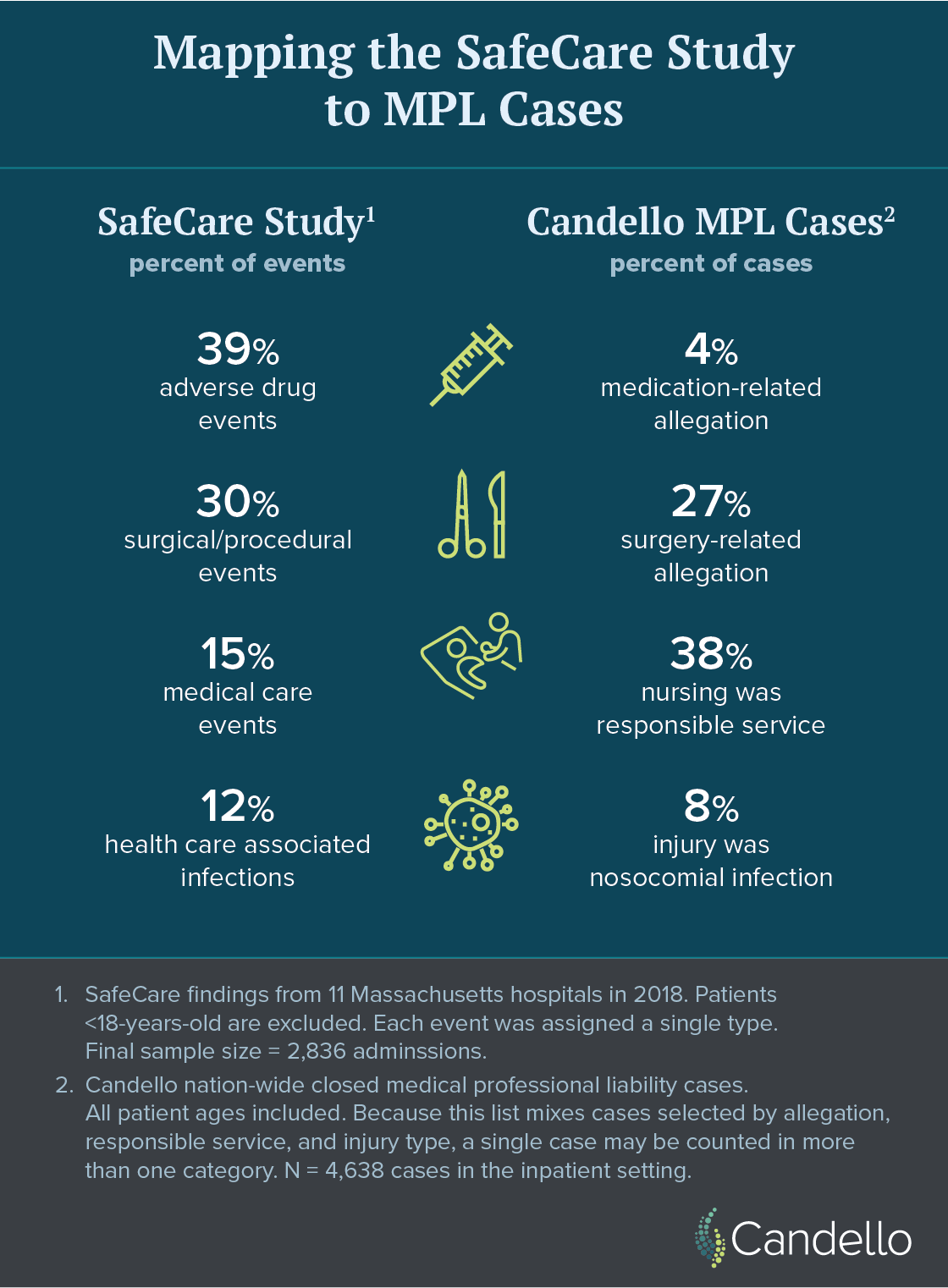
In the recently published New England Journal of Medicine article, The Safety of Inpatient Health Care, Dr. David Bates and his co-authors report on the most common types of adverse health care events encountered by hospitalized patients. This work, part of the SafeCare Study sponsored by CRICO, captured adverse events that occurred during inpatient stays in 2018 at 11 Massachusetts hospitals. Roughly one-quarter (23.6%) of patients experienced an adverse event and 22.7 percent of those events were deemed preventable.
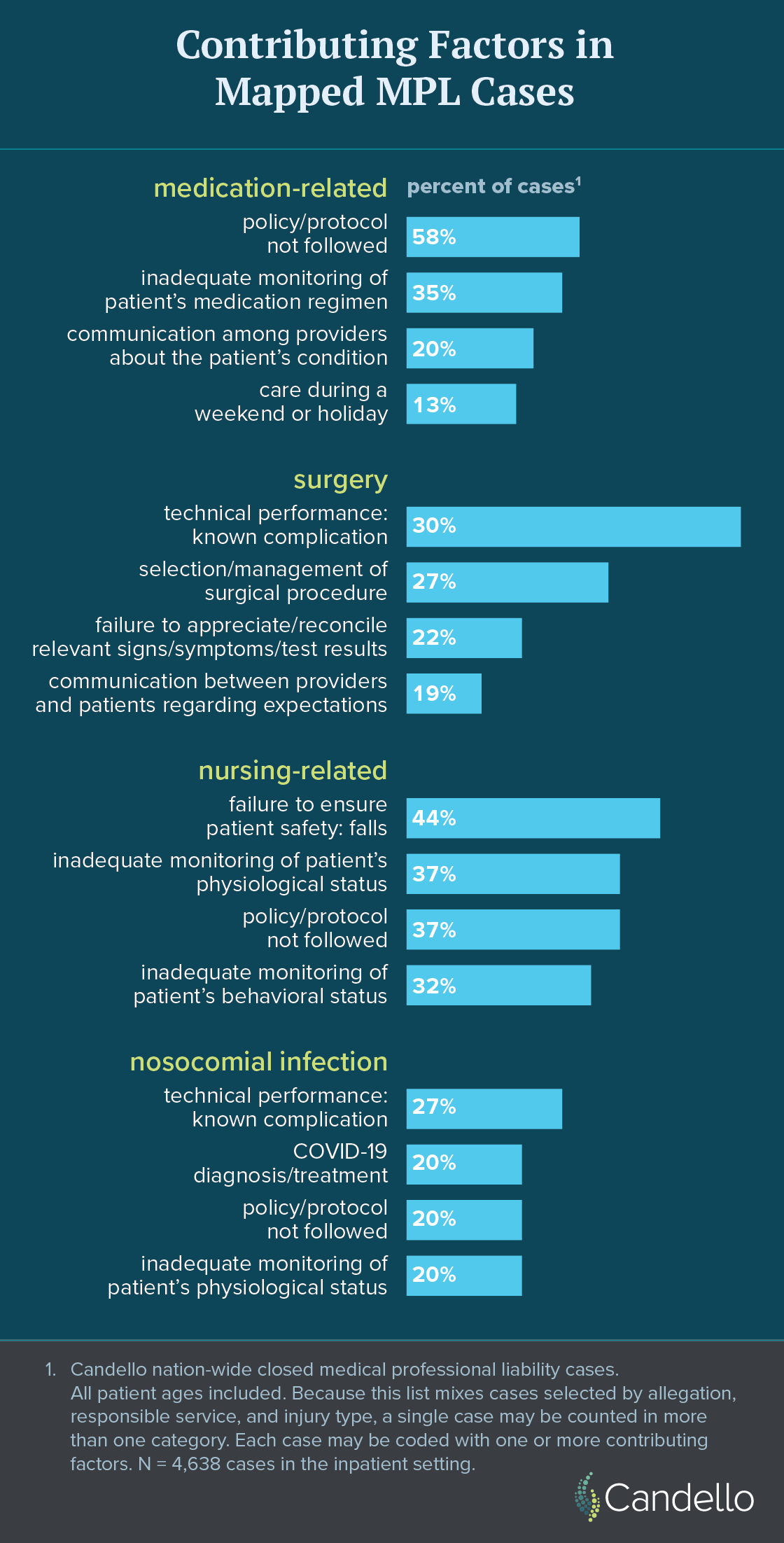
Relatively few adverse events—even those such as this study deemed preventable—turn into medical professional liability (MPL) claims or lawsuits. Nevertheless, some do lead to malpractice allegations and CRICO, via its Candello database, codes and analyzes those cases to understand what went wrong, and why. While the NEJM article is just one of several planned by the SafeCare Study team (including ambulatory care adverse events), the initial publication provides an opportunity to examine some key components of MPL cases aligned with the top adverse event types in the published findings.
Below, the (inpatient) adverse event types from 2018 are (approximately) mapped to inpatient-based MPL cases closed from 2017–2021.
Recent Issues
Surgical Malpractice: Fewer Cases, Higher Stakes
Beyond the Image: Radiology Risks
Obstetrics Claims: Higher Severity, Higher Stakes